What Qualifications Should a Massage Therapist Have? A Consumer’s Guide
Choosing a massage therapist is an important decision. Whether you’re looking for Swedish massage, deep tissue, sports massage, or another approach, you want confidence that the person providing your session has the appropriate training, qualifications, and professional credentials.
But what qualifications should a massage therapist actually have?
The answer varies depending on where you live — massage therapy is regulated differently from state to state and country to country. What doesn’t vary is the set of professional standards worth evaluating before you book. Here’s what to look for.
🎓 1. Formal Massage Therapy Education
The first thing to check is the therapist’s foundational education.
A professionally trained massage therapist should have completed an educational program that prepares students for professional practice. Massage therapy education typically covers:
📚 Anatomy and physiology
📚 Massage techniques and application
📚 Pathology and contraindications
📚 Client assessment
📚 Professional ethics and communication
📚 Health and safety standards
The amount and type of education required varies by jurisdiction. A straightforward question to ask: “Where did you complete your massage therapy training?” A professional therapist should be able to explain their educational background clearly and without hesitation.
📜 2. A Current License or Registration
Depending on your state or local jurisdiction, massage therapists may be required to hold a license, registration, certification, or other form of authorization to practice.
If massage therapy is regulated where you live, verifying that a therapist holds a current, active credential is one of the most useful steps you can take before booking.
Don’t assume that someone advertising massage services is automatically licensed.
When possible, verify through the appropriate government or regulatory agency. Check that the credential is:
✅ Current and not expired
✅ Active and in good standing
✅ Associated with the correct person
Requirements differ significantly between jurisdictions — what applies in your state matters most.
🎯 3. Appropriate Training for the Type of Massage You Want
Not every massage therapist specializes in every type of work.
Someone looking specifically for deep tissue massage may want to ask about the therapist’s training and experience with that technique. Someone seeking sports massage may want a therapist with a background working with active clients.
Instead of asking “Are you a massage therapist?” — which tells you very little — ask:
“What types of massage are you trained and experienced in providing?”
That one question can immediately tell you whether the therapist’s background matches what you’re actually looking for.
🏅 4. Relevant Certifications and Specialized Training
Additional certifications can provide useful information about a therapist’s professional development and areas of focus. A therapist may pursue additional training in:
📌 Sports massage
📌 Myofascial techniques
📌 Prenatal massage
📌 Reflexology
📌 Specialized continuing education programs
One important caveat: more certificates don’t automatically mean a better therapist. A long list of credentials shouldn’t replace verifying the therapist’s foundational qualifications, licensing, and relevant experience.
The more useful question is whether the therapist’s specialized training is relevant to your specific goals.
📅 5. Continuing Education
Some jurisdictions require massage therapists to complete continuing education to maintain their license. Others pursue it voluntarily. Either way, it matters.
Continuing education helps therapists expand their knowledge, learn additional techniques, and stay current with professional practices. Worth asking:
“What continuing education have you completed recently?”
The answer gives you insight into the therapist’s professional interests and how seriously they take ongoing development — not just the credential they earned years ago.
💪 6. Relevant Professional Experience
Education tells you what a therapist has been trained to do. Experience tells you how long they’ve been applying that training with real clients.
Experience is worth considering — but it shouldn’t be treated as the only measure of quality. A newer therapist may have excellent training, strong communication skills, and current knowledge. An experienced therapist brings years of hands-on practice.
Rather than asking “How long have you been a massage therapist?” — ask:
“How much experience do you have providing the type of massage I’m looking for?”
That’s a significantly more useful question.
🤝 7. Professionalism and Ethical Standards
Qualifications aren’t limited to diplomas and licenses. Professionalism matters just as much.
A qualified massage therapist should understand the importance of professional boundaries, client communication, privacy, and informed consent. Before your session, notice how the therapist engages with you:
🔍 Do they explain what to expect?
🔍 Do they ask about your goals?
🔍 Do they discuss pressure preferences?
🔍 Do they give you an opportunity to ask questions?
🔍 Do they respect your decisions without pressure?
These behaviors tell you as much about a therapist’s professionalism as any credential on a wall.
💬 8. Good Communication Skills
A therapist can have excellent technical training and still not be the right fit if communication is poor.
You should feel completely comfortable saying things like:
💬 “That’s too much pressure.”
💬 “I’d like more pressure in this area.”
💬 “Please avoid that area.”
💬 “I need to change position.”
A professional therapist receives that feedback seriously and adjusts accordingly. Communication is especially important because every client has different preferences, goals, and expectations — and the therapist cannot know yours without asking.
🛡️ 9. Professional Liability Insurance
Liability insurance is worth asking about, particularly when choosing an independent therapist.
Professional liability insurance helps protect a practitioner in the course of their work. Requirements and practices vary, so this isn’t something every consumer needs to verify before every appointment. But if you’re evaluating a therapist’s overall professionalism — particularly for ongoing care — it’s a reasonable question to raise.
📋 10. A Clear Professional Profile
A massage therapist should be able to provide straightforward information about their professional background, including:
📌 Education and foundational training
📌 License or registration status
📌 Certifications and specialized training
📌 Areas of specialization
📌 Relevant experience
📌 Continuing education
Be cautious if basic questions about qualifications are met with evasive or vague answers. You’re not interrogating anyone — you’re simply gathering enough information to make an informed decision about someone who will be providing hands-on care.
🔍 How to Verify a Massage Therapist’s Credentials
Checking qualifications doesn’t have to be complicated.
Start with the therapist’s website, professional profile, or booking page. Look for clear information about education, licensing, certifications, and experience.
If your jurisdiction licenses massage therapists, use the official regulatory database to verify the license — don’t rely solely on a social media profile or online advertisement. Reviews can tell you about other clients’ experiences, but they don’t replace verification of professional credentials.
❓ Questions to Ask Before Booking
Not sure what to ask? Start here:
💬 Where did you complete your massage therapy education?
💬 Are you currently licensed or registered where required?
💬 What types of massage are you trained to provide?
💬 How much experience do you have with the type of massage I’m looking for?
💬 Do you have relevant certifications or specialized training?
💬 What continuing education have you completed?
💬 What should I expect during my first appointment?
These questions don’t need to feel like a formal interview. They’re simply ways to understand who you’re trusting with your session.
⭐ Qualifications vs. Reviews — Which Matters More?
Both matter. You don’t have to choose.
Credentials answer: “Is this person appropriately trained and qualified to practice?”
Reviews answer: “What have other clients said about their experience?”
Neither tells the whole story. A therapist with excellent credentials may not be the right fit for your preferences. A therapist with glowing reviews should still meet the applicable professional and licensing requirements.
The best approach is to consider the complete picture.
⚠️ Red Flags to Watch For
Take note if you encounter any of these:
🚩 The therapist cannot clearly explain their training or qualifications
🚩 Required licensing information cannot be verified
🚩 Professional claims are vague or contradictory
🚩 They pressure you to book before answering reasonable questions
🚩 They dismiss questions about professional boundaries or consent
🚩 Their marketing makes unrealistic promises about what massage can achieve
A red flag doesn’t automatically prove someone is unqualified — but it’s a reason to slow down and investigate further before booking.
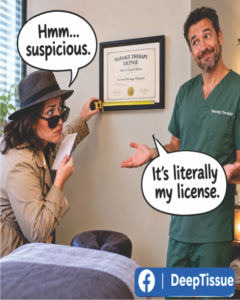
✅ A Simple Qualification Checklist
Before booking, take a few minutes to ask yourself:
☐ Does the therapist have appropriate massage therapy education?
☐ Is a license or registration required where I live — and can I verify it’s current?
☐ Does the therapist have training in the type of massage I want?
☐ Do they have relevant professional experience?
☐ Do they pursue continuing education?
☐ Can they clearly explain their qualifications?
☐ Do they communicate professionally and respectfully?
☐ Do they respect boundaries and client preferences?
☐ Do I feel comfortable asking questions before booking?
🎯 What Makes a Qualified Massage Therapist?
Choosing a qualified massage therapist isn’t about finding the person with the most impressive biography or the longest list of certifications. Look for a combination of:
🏆 Education — Appropriate massage therapy training
🏆 Licensing — Compliance with applicable local requirements
🏆 Specialized training — Education relevant to what you’re looking for
🏆 Experience — Relevant professional practice
🏆 Continuing education — Ongoing professional development
🏆 Professionalism — Respect for boundaries, privacy, and informed consent
🏆 Communication — A genuine willingness to listen and respond
🏆 Transparency — Clear, honest information about qualifications and services
A little research before your appointment goes a long way. Qualifications are one important part of choosing the right therapist — but the best fit is someone who is appropriately qualified, communicates clearly, respects your boundaries, and has experience that aligns with what you’re looking for.
Before your next massage, don’t just ask “When are you available?” Ask: “What qualifications do you have — and are they right for what I need?”
👉 Read the related article in our massage therapy community: https://web.facebook.com/groups/deeptissue/posts/1572684824343919
Graceful Touch Massage | 1215 Mt Rushmore Rd, Rapid City, SD | 605-574-1998